
March 2026
Freedom within a Framework
Why discipline and creativity are not opponents, but two parts of the same system — and how the right structure creates momentum instead of constraint.
In one corner we have Walt Disney — the dreamer. Armed with imagination, art supplies, and ideas that most people initially thought were impossible. In the other corner we have Roy O. Disney — the operator. Armed with spreadsheets, budgets, and the uncomfortable responsibility of occasionally saying the word no. It is the classic battle: vision versus discipline, creativity versus structure, the dreamer versus the dream killer. But what if that framing is wrong? What if Walt and Roy were not opponents at all? What if they were actually two halves of the same system?
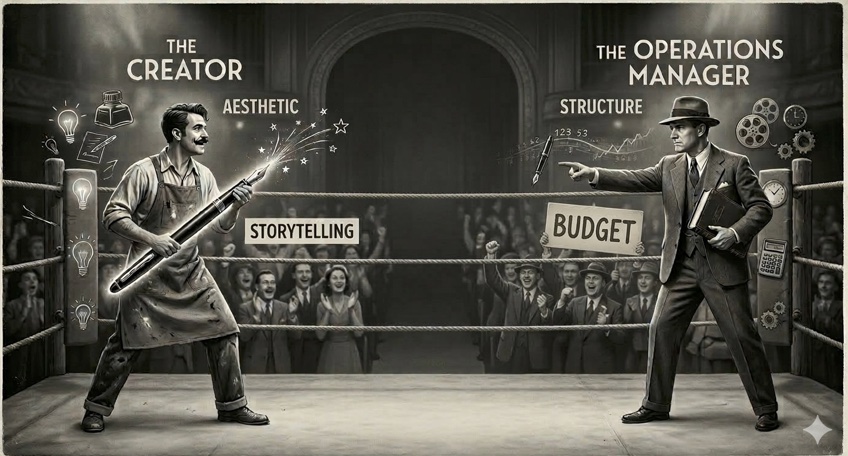
If Walt ran the company alone, he might have been remembered as a brilliant artist who constantly bounced checks. If Roy ran the company alone, he might have built a very efficient company that nobody cared about. Together they built The Walt Disney Company. And they did it through something most organizations misunderstand: freedom within a framework.
When people hear the word creativity, they often think of artists, designers, or filmmakers. But creativity exists everywhere in a company. The support agent who builds a custom report for a client is being creative. The operations manager who redesigns a workflow is being creative. The sales leader who discovers a new way to position a product is being creative. Creativity is not limited to art. It is the ability to solve problems in better ways.
So the leadership question is not: how do we control creativity? The better question is: how do we empower it without breaking the business?
The answer is not more rules. It is clarity. Strong frameworks provide three things: strategic priorities, decision authority, and economic constraints. A good framework does not control people. It guides them. Employees understand what matters, who decides, and what resources exist. Inside that framework, they are free to act. And when people have clarity, decision-making accelerates.
At Hypora, we often describe this as the Riverbank Principle. Imagine the Mississippi River. Without riverbanks, the water spreads outward and becomes a swamp. It loses its direction, its speed, and eventually its energy. But when the water is guided by strong banks, something powerful happens. The river gains momentum. It can move ships. It can power cities. The water did not change its nature — it simply gained direction. Organizations behave the same way. Too little structure and the company becomes chaotic. Too much structure and it becomes bureaucratic. But when the framework is right, something powerful emerges: velocity.
When Hypora works with organizations, the goal is not to rebuild what already exists. It is to strengthen it from within. Most operational gaps are not caused by bad employees or bad leadership. They usually exist because of competing priorities, legacy processes, external constraints, or simply the way things have always been done. Our role is to step back and study the river. We listen to how processes are supposed to work. Then we observe how they actually work. From that perspective, we help organizations refine their riverbanks — not by adding bureaucracy, but by removing friction.
The goal is not control. The goal is momentum. When companies create the right framework, talented people do not feel constrained. They feel empowered. They take ownership. They take pride in their work. They become brand ambassadors. Just like Walt needed Roy, freedom does not exist without a framework.